
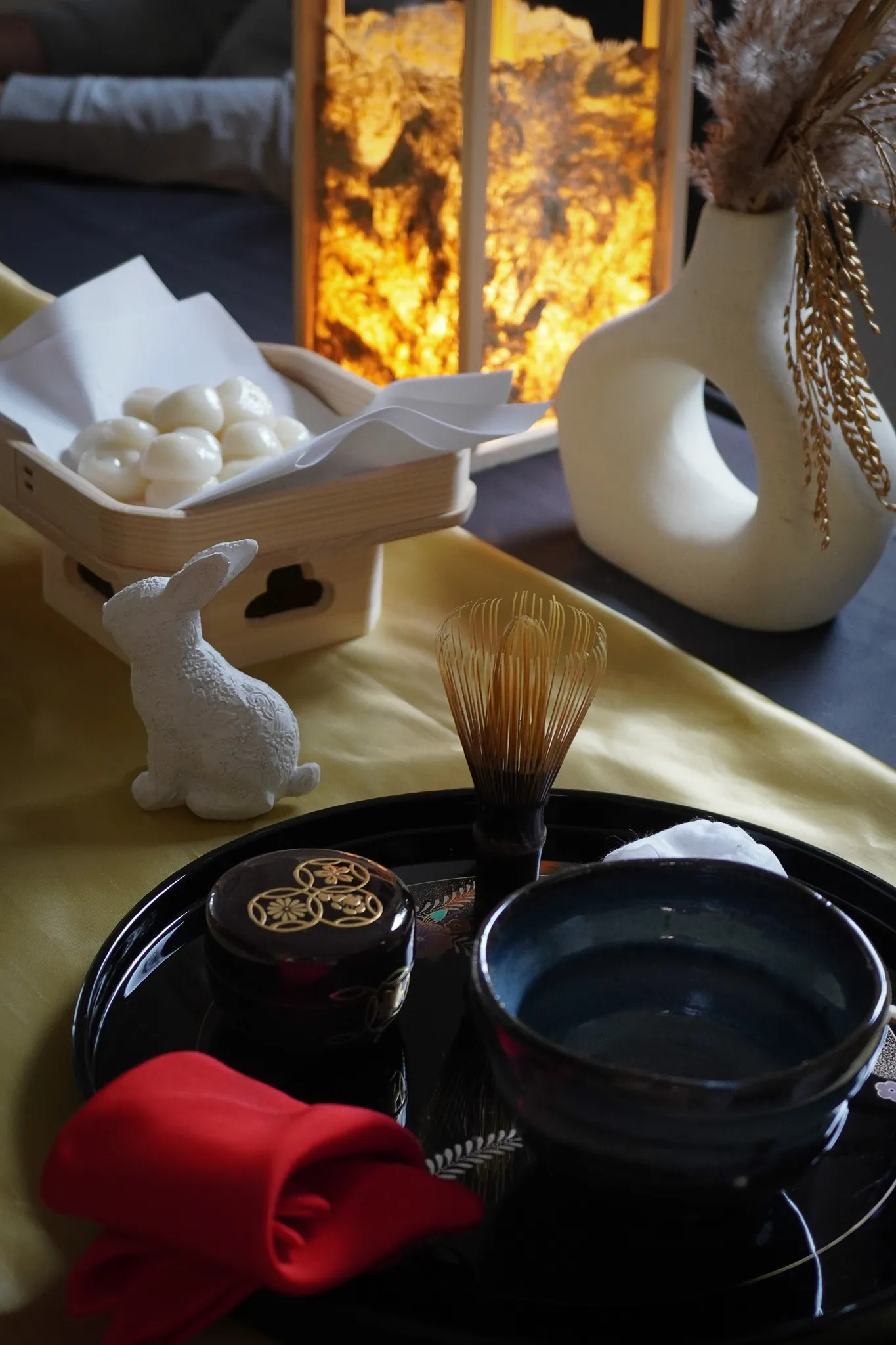
Japanese culture has long found ways to notice the changing seasons — not only through festivals, but through the objects we use, the sweets we prepare, the flowers we choose, and the way we welcome guests.
For this edition of Biyori Days, we invite you to spend an autumn afternoon exploring that idea through table styling, traditional craft, wagashi and tea.
Rather than simply learning four separate activities, the afternoon is built around one theme: how the season can become part of everyday life.
You will be guided through each element step by step, with plenty of time to create, taste, ask questions and enjoy the atmosphere.
Living with the seasons
In Japan, the seasons are reflected in many small details of daily life — colours, motifs, flowers, tableware, food and the way a space is arranged.
Together with Rie, a certified Japanese table stylist, you will explore how these seasonal elements can be brought together to create an autumn table.
“Table styling” may be unfamiliar as a concept in Germany. It is more than simply decorating a table. It is about creating a setting that expresses a season, an occasion or a feeling through the thoughtful combination of tableware, textiles, natural materials, colours and small decorative elements.
You will learn how to look at a table differently and how even simple objects can create a seasonal atmosphere at home.
Make your own Kumiko coaster
You will also make your own Kumiko coaster.
Kumiko is a traditional Japanese craft in which small wooden pieces are carefully assembled into geometric patterns. Traditionally, the technique is used in Japanese interiors, particularly for decorative wooden screens and architectural details.
During the workshop, you will create a small Kumiko piece yourself and experience the precision and rhythm behind this Japanese craft.
Your finished coaster is yours to keep and can later become part of your own tea or table setting at home.
Create a seasonal Nerikiri
Seasonality is also an important part of Japanese wagashi.
You will make one nerikiri, a traditional Japanese sweet often served together with matcha.
Nerikiri designs frequently take inspiration from nature and the changing seasons — flowers, leaves, moonlight, weather and other seasonal motifs.
You will shape your own autumn-inspired nerikiri while learning a little about how Japanese sweets communicate the season not only through taste, but also through colour, form and design.
Your finished nerikiri is yours to take home.
Tea ceremony for everyday life
The afternoon will end with tea.
You will be introduced to a simple form of tea preparation inspired by the Japanese tea ceremony, guided step by step by a tea ceremony practitioner of the Urasenke tradition.
Rather than recreating a formal tea room, the focus is on something you can understand and enjoy in your own home.
You will learn how to prepare matcha, how the host and guest interact, and how small gestures and objects become part of the experience.
No previous knowledge is required, and you do not need to sit in seiza.
The aim is not to memorise complicated rules, but to understand the thinking behind Japanese tea and to leave with a way of enjoying matcha more intentionally at home.
What you’ll learn
- How Japanese culture brings the changing seasons into everyday life
- How seasonal colours, objects, tableware and natural elements can be combined in a table setting
- The basic idea behind the traditional Japanese craft of Kumiko
- How to make your own Kumiko coaster
- How seasonal motifs are expressed through nerikiri wagashi
- How to shape one seasonal nerikiri
- How to prepare and enjoy matcha through a simple tea practice you can recreate at home
- An introduction to the values and gestures behind the Urasenke tea tradition
You’ll take home
- Your own Kumiko coaster
- Your own seasonal nerikiri
All materials used during the workshop are included.
Who is this workshop for?
You do not need any previous experience with Japanese tea, wagashi, craft or table styling.
The workshop is designed for anyone who is curious about Japanese culture and would like to experience it through making, tasting and learning rather than only through explanation.
It may especially appeal to you if you enjoy Japanese aesthetics, seasonal living, tea, handmade crafts, interior styling or simply spending an afternoon doing something a little different.
The group will be kept small so that we can guide everyone personally through each part of the experience.
Biyori Days
Biyori Days is a series of small cultural gatherings built around the idea of Japanese seasonal living.
Each chapter brings together different aspects of Japanese culture — such as tea, wagashi, craft, kimono or seasonal customs — around one moment of the year.
The idea is not simply to reproduce traditions exactly as they are practised in Japan, but to explore what they can bring into our own everyday lives here.
For Chapter II, we turn toward autumn: its colours, its materials, its sweets and the pleasure of sharing tea around a seasonal table.