

From October 3 to 7, the traditional Japanese calendar enters the microseason 水始涸 — Mizu hajimete karuru, meaning “water begins to dry up.”
It is one of Japan’s 72 microseasons, or 七十二候 shichijūni-kō, a way of observing the year through small and gradual changes in nature.
Rather than dividing the year only into spring, summer, autumn and winter, this old calendar notices much quieter transitions: insects disappearing, dew becoming colder, flowers blooming, birds arriving, or fields changing after the harvest.
水始涸 is one of those subtle moments.
Water Leaves the Rice Fields
The phrase does not simply describe a dry landscape.
It refers especially to the rice paddies at harvest time.
Through the warmer months, rice grows in fields filled with water. As the grains ripen and harvest approaches, the water is gradually drained from the paddies.
The landscape begins to change.
The bright summer greens soften into yellow, ochre and gold. The wet surface of the fields disappears, the earth becomes visible again, and the rice plants stand heavy with grain.
It is a very quiet transformation, but it signals something important: the growing season is coming to an end.
Autumn is no longer just beginning. It is settling in.
A Wagashi for 水始涸
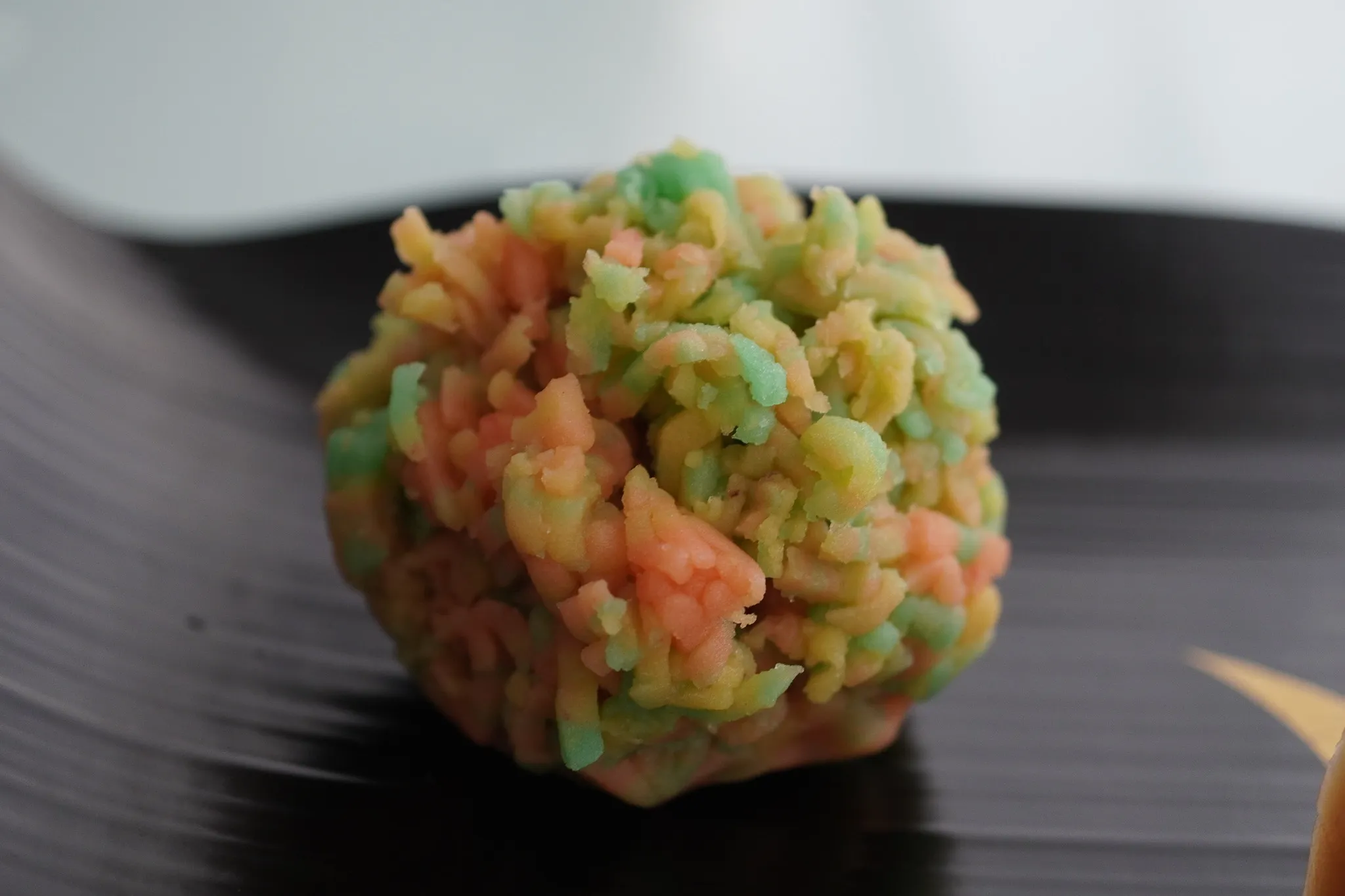
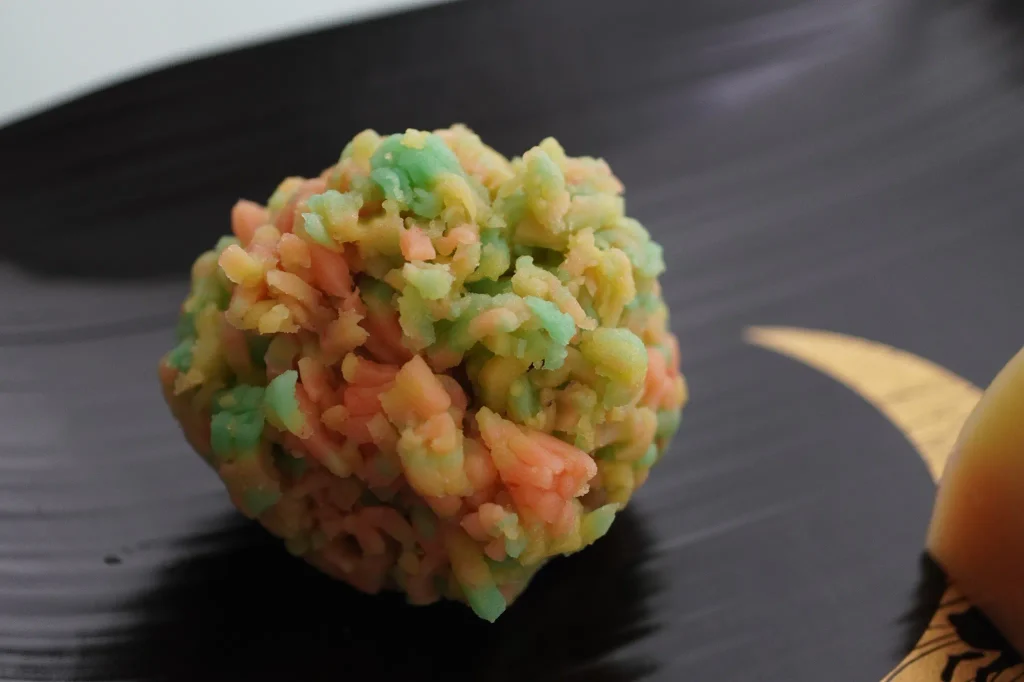
For this microseason, I created a wagashi inspired by the changing colors of the fields.
The surface is made up of small pieces in green, yellow, warm orange and earthy tones, layered together rather than arranged into a perfectly defined shape.
I wanted it to feel less like a single flower and more like a landscape.
Some parts still carry the green of late summer, while others have already turned toward the warmer colors of harvest.
That mixture feels especially appropriate for 水始涸.
Seasonal change is rarely immediate. A field does not become golden overnight. One color slowly appears beside another until the whole landscape has changed.
Wagashi can capture these in-between moments beautifully.
Living with the Microseasons
What I love about the 72 microseasons is how closely they ask us to look.
水始涸 is not a dramatic seasonal event.
There is no first snow, no cherry blossom, no brilliant display of autumn leaves.
Instead, it draws attention to something practical and almost ordinary: the water being removed from a rice field.
And yet, within that small agricultural change, there is an entire season.
It tells us that the rice has matured. That harvest is close. That the heat of summer has passed. That the landscape and the work of the people living within it are changing together.
This way of seeing the seasons is deeply connected to Japanese food culture as well.
Tea, wagashi, flowers, utensils and even the words chosen for a gathering can reflect what is happening outside at that particular moment.
Seasonality is not only about decorating something with a maple leaf because it is autumn.
It is about noticing which part of autumn we are actually in.
A Small Invitation to Notice Autumn
Even if we do not live beside rice paddies, the idea behind 水始涸 can still be part of everyday life.
Perhaps the mornings have become cooler.
Perhaps the light in the afternoon has changed.
Perhaps leaves are beginning to collect along the street, or the colors at the market have shifted toward chestnuts, pumpkins and persimmons.
The 72 microseasons remind us that a season is made from many tiny changes.
Sometimes we only notice them when we deliberately stop and look.
For these few days, 水始涸 invites us to notice the landscape moving toward harvest — and the quiet beauty of things approaching completion.
Experience the seasons through wagashi
I explore Japanese seasonal culture through wagashi, tea and small gatherings inspired by the rhythm of the year.
If you would like to make seasonal wagashi yourself, you can find my upcoming workshops and events on the Biyori events page.
Leave a Reply